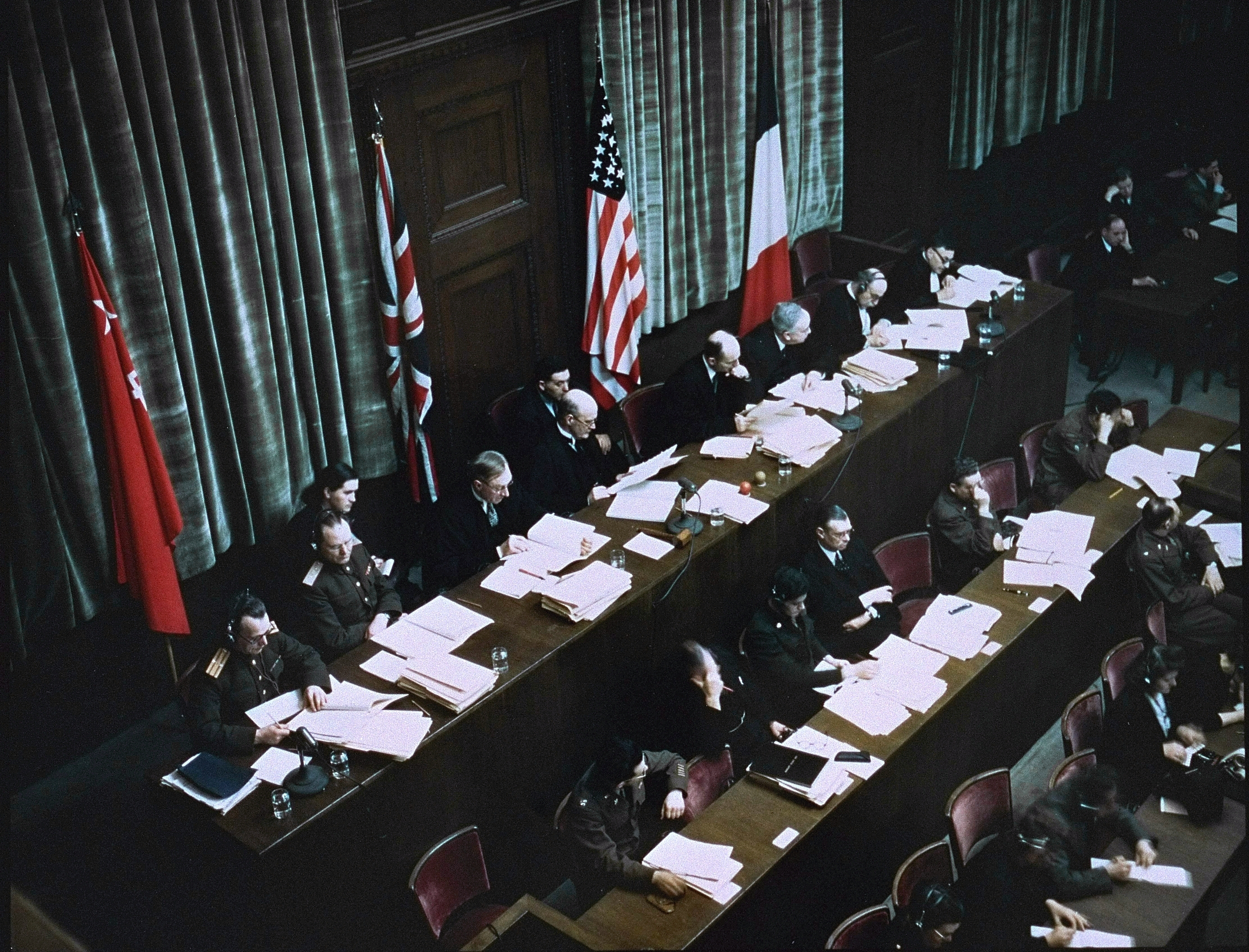
The Nuremberg Trials were a series of trials held between the years of 1945 and 1946 following the end of World War II. These trails were conducted by the Allied powers to prosecute leading political, military, and economic figures of the Nazi party for major war crimes. The most prominent proceedings were carried out in the city of Nuremberg, chosen both for its symbolic significance and its intact courthouse.
The defendants on trails were charged with four main categories of crimes, those being: crimes against peace (planning and waging aggressive war), war crimes, crimes against humanity (including genocide and mass murder), and conspiracy to commit these crimes. Twenty-four major Nazi officials were indicted, including high-ranking leaders such as Hermann Göring, Joachim von Ribbentrop, and Albert Speer. The trials relied heavily on documented evidence, including official records, films, and survivor testimony, to establish responsibility for events like the Holocaust.
The outcomes of the trials were mixed: twelve defendants were sentenced to death, three received life imprisonment, four were given prison terms, and three were acquitted. The proceedings established a critical legal precedent by affirming that individuals—not just states—could be held accountable for international crimes, and that “following orders” was not a valid defense for atrocities.
 Back to Home